Pages

Wednesday, October 25, 2017

Maths Support Site

ONE STOP SHOP

Over the holidays I spent a lot of time going through all the Bruce Moody Key Concepts and building a website that can support our learners.  I wanted a one stop shop that children and parents could use to check 'how' to solve number problems.  Parent feedback has been highly positive!  

Rutherford Support Site


Sunday, October 15, 2017

What Makes a School Dyslexia-Friendly?

https://www.noodle.com/articles/the-right-schools-for-students-with-dyslexia

School Culture and Philosophy

How a school understands its mission may be the most critical element of how dyslexia-friendly it is. Does the school recognize and support a variety of learning styles? Does it have strategies in place to accommodate students with learning challenges?
Elementary schools should offer evidence-based reading programs, and all schools should offer assistive services to students with identified learning issues. Dyslexia-friendly elementary schools also screen early for signs of dyslexia, and do not wait for children to fail before providing extra services. Additionally, remediation for struggling readers needs to be evidence-based.
Does the school see the potential in its students with dyslexia? If someone with dyslexia attends a school that has high academic expectations for students with her learning profile, it will positively inform her sense of potential.

Use of the Word “Dyslexia”

This is a more significant indicator than one may initially think. Using the word helps to demystify and validate the condition. If teachers and administrators use the word regularly, and without hesitation, it reassures students that there is nothing to be ashamed of and that dyslexia is not something to hide. It also sets a tone that encourages students to self-advocate in their classes.

Support for Students with Dyslexia

Most parents immediately think about sports, the arts, leadership, service, or some other non-academic pursuit as potential areas in which their dyslexic child may excel in school. Those areas are important, but it is also likely that a struggling reader may want to focus deeply in academic areas.
Dyslexia-friendly schools support a student with dyslexia to develop her creative-thinking abilities as well as her passions for mathliteraturehistory, and science. Dyslexia-friendly schools can readily point to their high-achieving students with dyslexia.

Access to Accommodations

This is probably the most important element of all. Academic success for a dyslexic student is commonly related to access to accommodations, either via a 504 plan or an Individualized Education Plan (IEP).

Extra Time

The most critical accommodation for a dyslexic student is the provision of extra time — to read books, complete assessments, and finish certain assignments. Because reading and writing take longer for students with dyslexia, they often require additional time to access content and express their understanding.

Audiobooks

There are now many ways to provide dyslexic readers with recorded books — even Shakespeare’s works are accessible via assistive technology. Some devices read text aloud with a synthetic voice; others read with a human voice. Some assistive technologies even sync audio and visual text so that a student with dyslexia can listen while tracking the words.
Dyslexia-friendly schools provide access to these transformational assistive technologies, or at least support the use of personal reading devices in and out of the classroom.

Keyboarding and Speech-to-Text Software

Students with dyslexia are typically poor spellers with labored and barely legible handwriting. Using a keyboard or another device with speech-to-text software frees students with dyslexia to focus their energies on the content, rather than the form, of their writing. It also makes their work readable.
Yes, dyslexics will still need to learn handwriting, but that will not likely be their standard mode of expression. With spell-checking and editing programs, dyslexics who compose on a keyboard are liberated from many of the challenges that often diminish the quality and volume of their written expression.

Second Language Waiver

Foreign languages are often very difficult for dyslexics. Most middle schools and high schools will provide alternative courses or ways of meeting a foreign language requirement. Generally, it is not an effective use of time to have students with dyslexia involved in foreign language study when they are struggling with deficits in English.

The 21st-Century Classroom

The 21st-century classroom celebrates student abilities to exercise big-picture ideation, creativity, collaboration, critical thinking, and communication while questioning the traditional value placed on rapid regurgitation of memorized information. Twenty-first century teaching styles employ a variety of meaningful measures to facilitate and gauge student understanding, abilities, and achievement.
These pedagogical changes profoundly benefit the dyslexic learner — but they also obviously benefit all learners. Ultimately, dyslexia-friendly schools are student-friendly schools.

Tuesday, August 29, 2017

Student Voice (Google Classroom) Feedback on "Flipped" Maths this week..

This week I created 13 videos on Bruce's TOP key Maths areas.  I also created follow up practice tasks for children to practice.

I gave time to the children to view the Key Learning areas and then when they felt ready and able to do a follow up activity they could - If they needed help at any stage they could re-watch the video and/or come to a teacher for that 1 on 1 support.

Order of (journey) implementation:

1.  What do my learners need to learn?
2. Create video lessons on the each key learning area and model the exact way in which Bruce suggests they be taught initially.
3. Create follow up tasks based on the learning intentions in the videos.
4. Create a 1 step plan page for the class for quick and easy access
5. Push it our via Google Classroom


Observations in the first 2 days:

  • WOW - Kids focussed and all on different individual learning tasks.
  • Greater understanding  - eg: Nisha told me she understood it as she watched it twice.
  • Honesty about gaps and LESS STRESS:  eg: Alexie came up to me and told me she had difficulty with a multiplication/measurement tasks and that she was just going to go back and rewatch the video - she returned and said she understands now and she solved it independently.  This is a huge step for Alexie!
  • I was able to work with 2 larger groups leaving Sophie to work with the Fraction Foxes who needed additional support with fractions.
  • Gaps are being filled and also appearing - But we have the plan to fill them with individual workshops!
  • Some student message in the 1st 2 days!


Saturday, August 26, 2017

Thursday, August 24, 2017

What video resources are the best places to start

http://flippedlearning.org/syndicated/making-videos-flipped-learning/

https://learnzillion.com/resources/99824-fractions-and-decimals

https://learnzillion.com/assignments/N6VB3SY

Spelling - Their Way Resources

https://mathantics.com/

http://www.math4children.com/videos.html

http://www.mathmammoth.com/videos/

http://www.watchknowlearn.org/Category.aspx?CategoryID=85

http://www.mathplayground.com/mathvideos.html

https://www.khanacademy.org/

http://www.homeschoolmath.net/teaching/#elementary

http://www.teachertools.co.nz/lessons-and-more/


What is Flipped Learning


Wednesday, August 16, 2017

Flipping The Classroom to Improve Engagement

Flipping the Classroom to Improve Student Engagement

Person Writing with Pen - Panopto Flipped Classroom Softwarerecently-released study indicates that students in classes that employ active learning methods outperform students taking traditional courses, and it’s shaking up the academic world this week.
The study was performed by biologists from the University of Washington and the University of Maine who meta-analyzed over 200 studies that compared student performance in undergraduate science, technology, engineering, and mathematics (STEM) courses under traditional lecturing versus active learning.
What the biologists found was startling: students that attended classes with traditional, instructor-focused, “teaching by telling” lectures were 1.5 times more likely to fail than students in classes that employed active learning methods. Additionally, the study found that average exam scores by students in active learning sections were 6% higher than those in traditional lectures.
Although there is no single definitive approach to active learning, the release of these findings has sparked a lot of discussion among educators on some of the best ways that teachers can improve student engagement in their classrooms.
One of the fastest-growing ways of making class time more interactive is flipping the classroom (also known as flipped teaching or the inverted classroom). In flipped classroom scenarios, students view pre-recorded lecture videos before coming to class, and then use the time during class for activities that allow them to engage with or practice the material under the guidance of the instructor. These activities can include:
  • Group problem-solving
  • In-depth questioning and discussion
  • Student polling using personal response systems (clickers)
  • Student-generated content and presentations
  • Solving worksheets or tutorials, and more.
Interactivity doesn’t have to be reserved for in-class time. Professors that are flipping their courses can also make their lecture recordings more engaging by embedding quizzes, polls, and other interactive web content into their videos.

"Flipping "eck!"


Wednesday, August 2, 2017

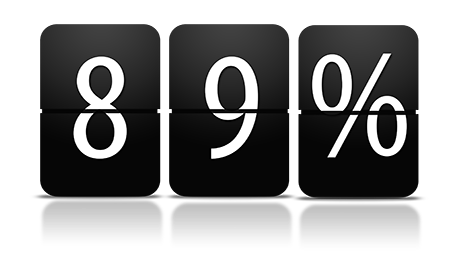
Do you think you are making progress this year?

Do you feel like you are making progress this year?

Children were allowed to write their responses and for this pie-graph data, I chose all positive responses in the YES votes.  The reason for this clarification is that some said things like "kind of" or "in writing"

It is pleasing to see that children feel they are making progress.  The next thing I want to gather data on is specific data on attitudes to writing and assess if there has been in improvement in attitudes toward writing from the previous year.

Continuity, Consistency and Care - Could this be a good recipe Hub 2 children?

ClassroomLooping.jpg
In the current climate of education—at least in my state—accountability is at an all-time high while financial support is at a historic low. Every teacher I know is working with fewer resources and more challenges each year. What is a school to do?
Combining Effectiveness and Efficiency in the Classroom
Bill Daggett, founder of the International Center for Leadership in Education, is a leading voice in the area of effective and efficient school practice. In his Effectiveness and Efficiency Framework, Classroom Looping is second on the list of examples of practices to consider. This means that it falls in quadrant D in the framework pictured to the right. He cites this as a low-cost, but high-effect, approach for schools. Interestingly, “technology” is the third example on his list. Even though there is up-front cost to engaging classroom tools, the impact on student achievement is worth the cost.

Is Looping the Right Choice for Your Classroom?
So, as a teacher or school leader reading this, here are some things to consider about looping:
What exactly are we talking about when we use the term “Classroom Looping?”Looping is defined as a teacher spending two or more years with the same group of classroom students. We typically see looping classrooms in the 3rd to 5th grade range, but there is good evidence that looping is very effective with transition years, when students go to middle school or high school. 
What are the advantages?There are some obvious advantages to looping. Students and teachers have established relationships going into the second year. Students know one another well and are connected to the school from day one. The teacher knows their students’ learning styles and personality types, which helps assist with grouping students and meeting students’ needs. 
Also, the teacher has the opportunity to engage parents and get to know them more deeply over the two-year cycle. There is also opportunity for teachers to engage students over the summer, either with projects or just for social connection. Plus, there are higher levels of job satisfaction for teachers when developing long-lasting relationships with students.
What are the disadvantages?There are potential downsides to looping, with the number one parent concern being, “What if I get ‘stuck’ with a bad teacher.” Because we know the negative impact that one year with an ineffective teacher can have, it would double the impact for two years. This concern is valid, but not a deal-breaker for a school. We shouldn’t allow any teacher to be ineffective—all teachers should be “ready to loop” and given the necessary support to be better at the process.
Another disadvantage could be the teacher’s need to learn two years’ worth of curricula. It takes time to learn, so this is a real consideration when making a decision. 
What impact does Classroom Looping have on achievement? Numerous research studies have shown positive outcomes in looping classrooms. Attendance and achievement both surpassed peer groups in this Florida study. This list of research from Brown University is a little older, but provides good support for looping. Keep in mind that typically outcomes are good because high-quality teachers are the ones chosen to loop (or who themselves have volunteered). Despite this, it is still worth considering.
Key Factors and Considerations
Teachers, when willing, tend to support looping: Any teacher I have known that looped with students swears by it. I personally do not believe that it works for every teacher, but I do believe teachers who are willing to try—and are supported by administration—can have great success with it.
It does take some resources: Just moving the 4th graders onto the 5th grade in the same classroom isn’t quite enough. When a teacher is willing to loop, they need resources and training for the curriculum of the other year. Don’t assume a great teacher is enough to be successful.
Consider looping for transitional years: The team approach to middle schools lends itself, at least structurally, to consider looping. As students get older—and the content and standards get harder—it is more difficult to move from one curriculum to the next. Administrators should consider the workload this creates and possible other issues when it comes to qualifications and licenses. A time when schools are most likely to allow students to “fall through the cracks” should be the exact time when we support them the most.
As a principal, I believe it is clear that with willing, effective teachers, looping can have a positive impact on students with minimal cost to the school and district. When every dollar counts and we have to count every dollar, educators must continue to consider new, effective ways to make a difference in the lives of our students. 


FROM http://blog.mimio.com/classroom-looping-what-it-is-and-why-schools-should-consider-it