Pages

Wednesday, August 2, 2017

Do you think you are making progress this year?

Do you feel like you are making progress this year?

Children were allowed to write their responses and for this pie-graph data, I chose all positive responses in the YES votes.  The reason for this clarification is that some said things like "kind of" or "in writing"

It is pleasing to see that children feel they are making progress.  The next thing I want to gather data on is specific data on attitudes to writing and assess if there has been in improvement in attitudes toward writing from the previous year.

Continuity, Consistency and Care - Could this be a good recipe Hub 2 children?

ClassroomLooping.jpg
In the current climate of education—at least in my state—accountability is at an all-time high while financial support is at a historic low. Every teacher I know is working with fewer resources and more challenges each year. What is a school to do?
Combining Effectiveness and Efficiency in the Classroom
Bill Daggett, founder of the International Center for Leadership in Education, is a leading voice in the area of effective and efficient school practice. In his Effectiveness and Efficiency Framework, Classroom Looping is second on the list of examples of practices to consider. This means that it falls in quadrant D in the framework pictured to the right. He cites this as a low-cost, but high-effect, approach for schools. Interestingly, “technology” is the third example on his list. Even though there is up-front cost to engaging classroom tools, the impact on student achievement is worth the cost.

Is Looping the Right Choice for Your Classroom?
So, as a teacher or school leader reading this, here are some things to consider about looping:
What exactly are we talking about when we use the term “Classroom Looping?”Looping is defined as a teacher spending two or more years with the same group of classroom students. We typically see looping classrooms in the 3rd to 5th grade range, but there is good evidence that looping is very effective with transition years, when students go to middle school or high school. 
What are the advantages?There are some obvious advantages to looping. Students and teachers have established relationships going into the second year. Students know one another well and are connected to the school from day one. The teacher knows their students’ learning styles and personality types, which helps assist with grouping students and meeting students’ needs. 
Also, the teacher has the opportunity to engage parents and get to know them more deeply over the two-year cycle. There is also opportunity for teachers to engage students over the summer, either with projects or just for social connection. Plus, there are higher levels of job satisfaction for teachers when developing long-lasting relationships with students.
What are the disadvantages?There are potential downsides to looping, with the number one parent concern being, “What if I get ‘stuck’ with a bad teacher.” Because we know the negative impact that one year with an ineffective teacher can have, it would double the impact for two years. This concern is valid, but not a deal-breaker for a school. We shouldn’t allow any teacher to be ineffective—all teachers should be “ready to loop” and given the necessary support to be better at the process.
Another disadvantage could be the teacher’s need to learn two years’ worth of curricula. It takes time to learn, so this is a real consideration when making a decision. 
What impact does Classroom Looping have on achievement? Numerous research studies have shown positive outcomes in looping classrooms. Attendance and achievement both surpassed peer groups in this Florida study. This list of research from Brown University is a little older, but provides good support for looping. Keep in mind that typically outcomes are good because high-quality teachers are the ones chosen to loop (or who themselves have volunteered). Despite this, it is still worth considering.
Key Factors and Considerations
Teachers, when willing, tend to support looping: Any teacher I have known that looped with students swears by it. I personally do not believe that it works for every teacher, but I do believe teachers who are willing to try—and are supported by administration—can have great success with it.
It does take some resources: Just moving the 4th graders onto the 5th grade in the same classroom isn’t quite enough. When a teacher is willing to loop, they need resources and training for the curriculum of the other year. Don’t assume a great teacher is enough to be successful.
Consider looping for transitional years: The team approach to middle schools lends itself, at least structurally, to consider looping. As students get older—and the content and standards get harder—it is more difficult to move from one curriculum to the next. Administrators should consider the workload this creates and possible other issues when it comes to qualifications and licenses. A time when schools are most likely to allow students to “fall through the cracks” should be the exact time when we support them the most.
As a principal, I believe it is clear that with willing, effective teachers, looping can have a positive impact on students with minimal cost to the school and district. When every dollar counts and we have to count every dollar, educators must continue to consider new, effective ways to make a difference in the lives of our students. 


FROM http://blog.mimio.com/classroom-looping-what-it-is-and-why-schools-should-consider-it
Do you like coming to school?


Hub 2 - Do you like coming to school?


Compared to the CPS Data of: 70% Year 4's, 65% Year 5's

3 Options were given to the children in the form of a Multi-Choice question; Yes - Always, Yes - Most of the time and No.

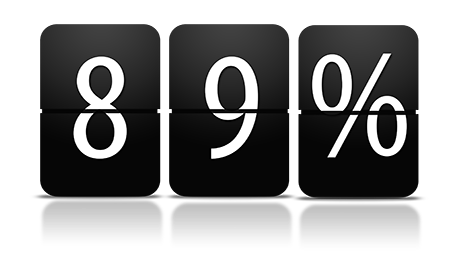
93% of Hub 2 Like coming to School!

Going Back to Go Forward ->

My Question:


If I improve learner agency through digital technology, cultural competencies and adaptive expertise, in the context of future focussed learning (using the Key Competencies) will it make a significant difference to the below boy writers in my class?


The Key words for me have been the Cultural Competencies and the significance difference to my below boy writers. Here is some recent student voice from 3 of the "below" writers in Hub 2. While they might not be AT National Standards just yet - they have made great progress and more importantly, they love writing and are trying so much more. They also ask for feedback and help!


"Writing is my favourite thing at school now" - Eli Ross
* Survey: What do you wish your teachers did more of?..... Writing!

"I am really proud of my writing Miss Hill, I think I have a gold nugget, can I please read it to you?" Grayson Bennett

"My Mum gave me a treat yesterday after I told her about my writing at school. She was so proud of me" Liam Jarratt (after he was able to demonstrate the abilities to use simple, compound and complex sentences)


Gathering the best assessment for the next stage...


Do you feel safe and happy in Hub 2?


Do you feel safe and happy in Hub 2?


54 children completed the survey and they had a scale of 1-10 (10 being VERY safe and happy).


I found this data incredibly humbling and I attribute this to the effort we put in creating the culture in Hub 2.

10/10 - 61%
9/10 - 23%
8/10 - 5%
7/10 - 2%
6/10 - 3.5%
5/10 -  5.5%
4/10 - 0%
3/10 - 0%
2/10 - 0%
1/10 - 0%


Saturday, June 17, 2017

Student Voice: Empowerment, Engagement, Efficacy In New Zealand Schools

I am reading a thesis report from Helen Parry - A Tauranga educator how carried out an extensive inquiry into Student Voice: Empowerment, Engagement, Efficacy In New Zealand Schools.

ABSTRACT: 
This study was carried out to examine student voice initiatives in schools; more specifically, the successes and challenges that leaders and teachers have faced when implementing student voice strategies. ‘Student voice’ has many meanings, but for the purpose of this study student voice refers to the ideas, views and perspectives voiced by students that are listened to by teachers and factored into learning opportunities both in the classroom and school-wide. 

A qualitative research methodology was used to explore and examine the notion of ‘student voice’ in two primary schools in Auckland, New Zealand. One-to-one interviews were carried out with four school leaders and two focus group discussions with teachers and two focus group discussions with students from two schools. The data collected were analysed in order to identify themes and commonalities across the two schools. Despite the variability of teachers’ and students’ understanding of student voice, ‘Assessment for Learning’ practices and student leadership roles were identified as the predominant features of student voice. 

Having a clear vision and values was seen by both schools as vital to successful student voice initiatives as was the belief that student voice must be led. Relationships were seen by both schools as an important component of student voice practice, and the data provided evidence that this philosophy was being upheld in both schools to various degrees. The challenges of implementing student voice strategies related to the sharing of control between the teacher and student with evidence of tokenism – there was little curriculum decision-making by students and the locus of control remained firmly held by the teacher. 

The recommendations from this study have implications for schools in terms of: developing teacher’s pedagogical knowledge and understanding of student voice; reducing tokenism; increasing student decision-making; changing the locus of control, and changing the pre-conditioning of students to enable them to have a voice. 

Wednesday, June 7, 2017

Assessing Student Engagement


I wanted to find out how I could measure Student Engagement and turn it into Quantitive data to track progress/effectiveness of my inquiry.